
Flexible Climate Data Sourcing
We select the climate data that best fits your objectives, assets, geography and level of assessment. Working with our partners or local sources, we give you the flexibility and confidence in the underlying data.
We help organizations make sense of climate risk, focus on what matters most, and deliver effective adaptations.
Already have an account? Log in
Nexus is a climate risk and adaptation platform. It quantifies the physical damage and operational disruption climate hazards cause across a portfolio, prioritizes adaptation and investment decisions, and helps you track your physical climate risk over time.
It works from your assets and how you operate them. Arcadis engineers build the damage and disruption functions that convert a flood depth into repair cost, or a run of heat days into lost service, for your asset types. Risk comes out as average annual loss: dollars of damage, days of disruption, and the operating measure you already manage. For a freight railroad that is gross ton miles, for a passenger operator delay minutes, for a plant units per day, for a public body population affected.
Risk is rarely spread evenly. On one 27,000 asset freight rail network, 2 to 4% of assets carried 80% of the near-term risk. Finding that concentration is what makes adaptation affordable: effort and capital go to the assets that carry the loss, not evenly across the estate.
From there Nexus carries the same asset data through adaptation options and costs, an investment program set against the funding available, design and delivery by Arcadis engineers, and year-on-year tracking of how portfolio risk changes as you buy and sell assets and complete works.
Nexus assesses physical risk for portfolios that range in size, from a handful of sites to many thousands of locations globally. We combine best in class climate data with local and client datasets where they are more accurate, then apply damage and disruption functions designed for your specific asset. Asset risk is described by average annual loss (AAL), Climate Value at Risk (CVaR), and tail end impacts for physical damage and operational disruption, under multiple scenarios and time horizons.
What you get: quantified risk in dollars for damage and disruption, by asset, by hazard, and across the portfolio.
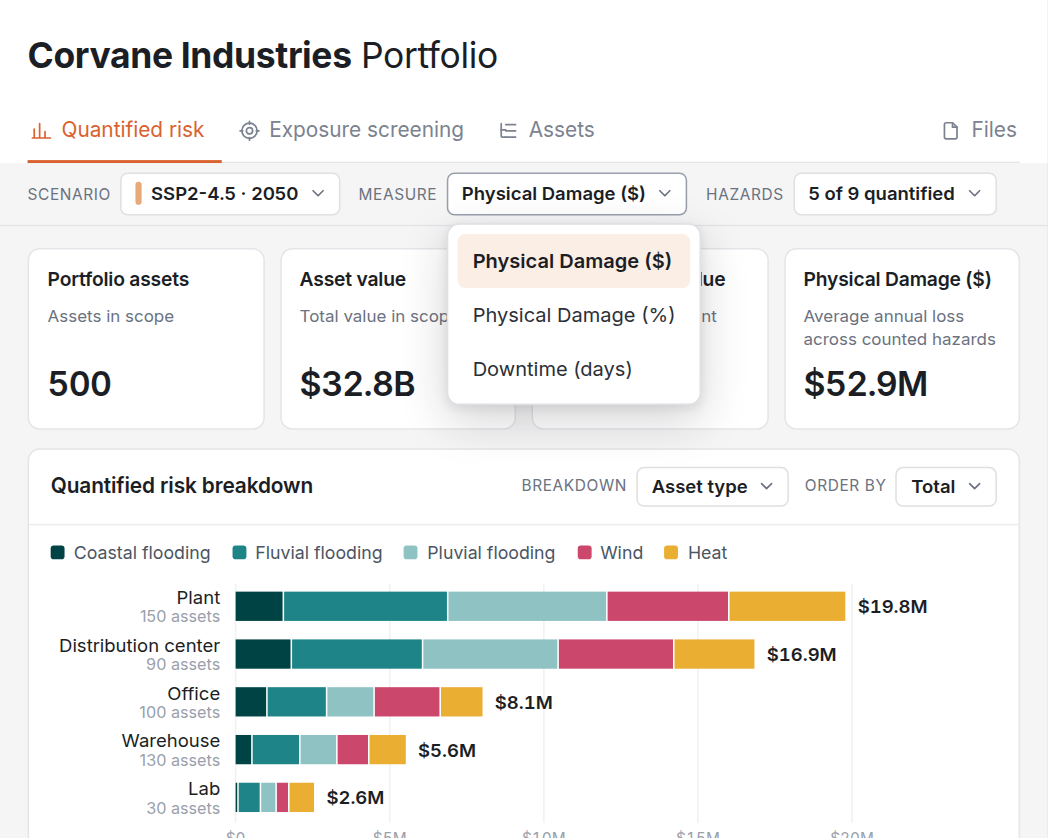
Nexus ranks assets and asset-hazard pairs by expected and tail-end loss, compares scenarios, and flags outliers against the portfolio average. Screening prioritizes sites for detailed assessment and adaptation planning.
What you get: a prioritized list of assets and asset-hazard pairs ready for adaptation planning.
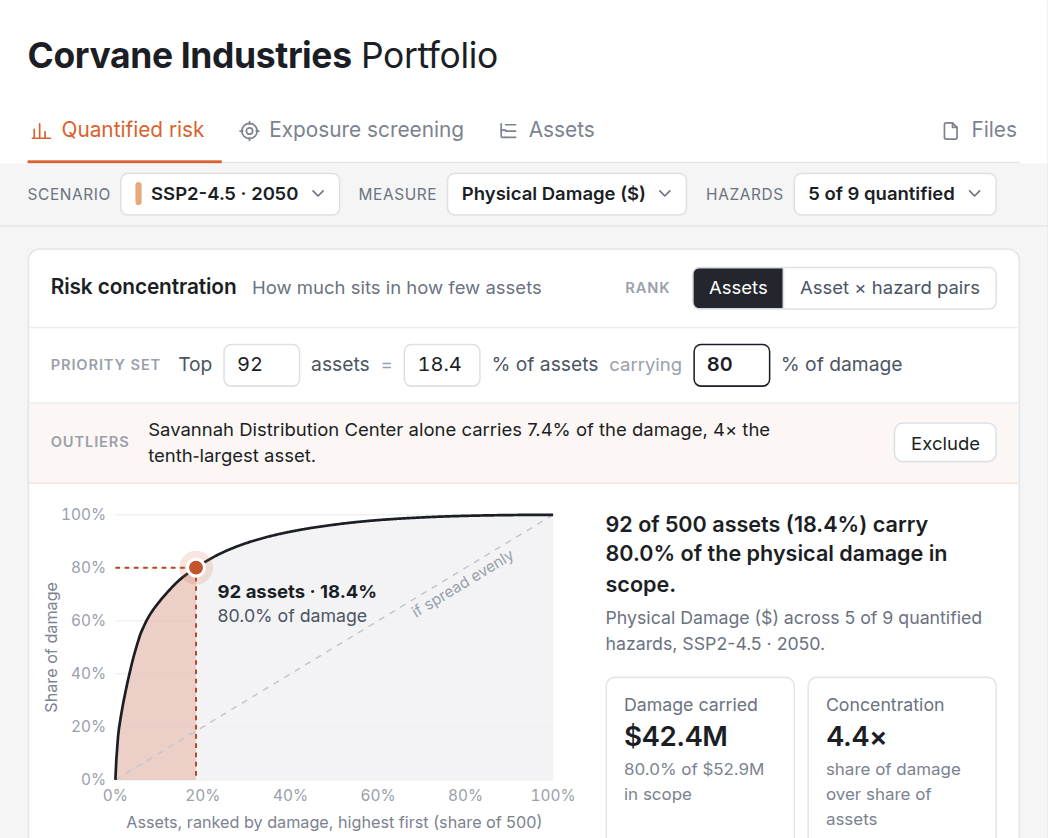
For each priority asset and hazard, Arcadis engineers develop measures specific to your assets and hazards. Each option carries a cost estimate and a modeled reduction in loss against baseline, giving you an overall ROI that you can use to compare with other business priorities.
Our adaptation optimization engine tests combinations of adaptations across climate scenarios and time horizons to optimize investment returns for a given budget. You can alter adaptation priorities between damages and disruptions, alter funding sources, and create timeline scenarios to find greatest impact for your objectives. Working with your finance, risk, and engineering teams, adaptation investments are integrated with wider asset and risk management plans.
What you get: an actionable list of adaptations with cost, avoided loss, and payback.
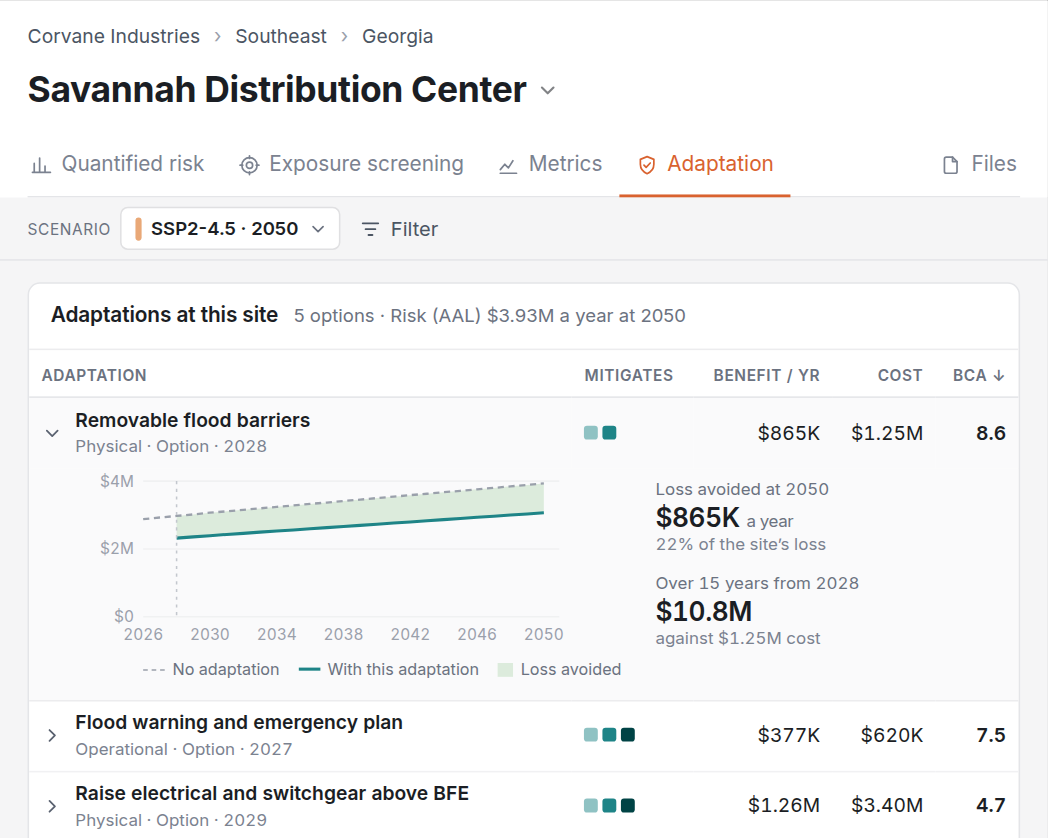
Illustrative mock-up
Our optimization engine tests combinations of adaptations across climate scenarios and time frames against a budget ceiling, and returns the sequence that buys the most avoided loss for the money available. Finance teams get a phased program to approve rather than a list of recommendations.
What you get: a phased, budget-constrained adaptation investment program.
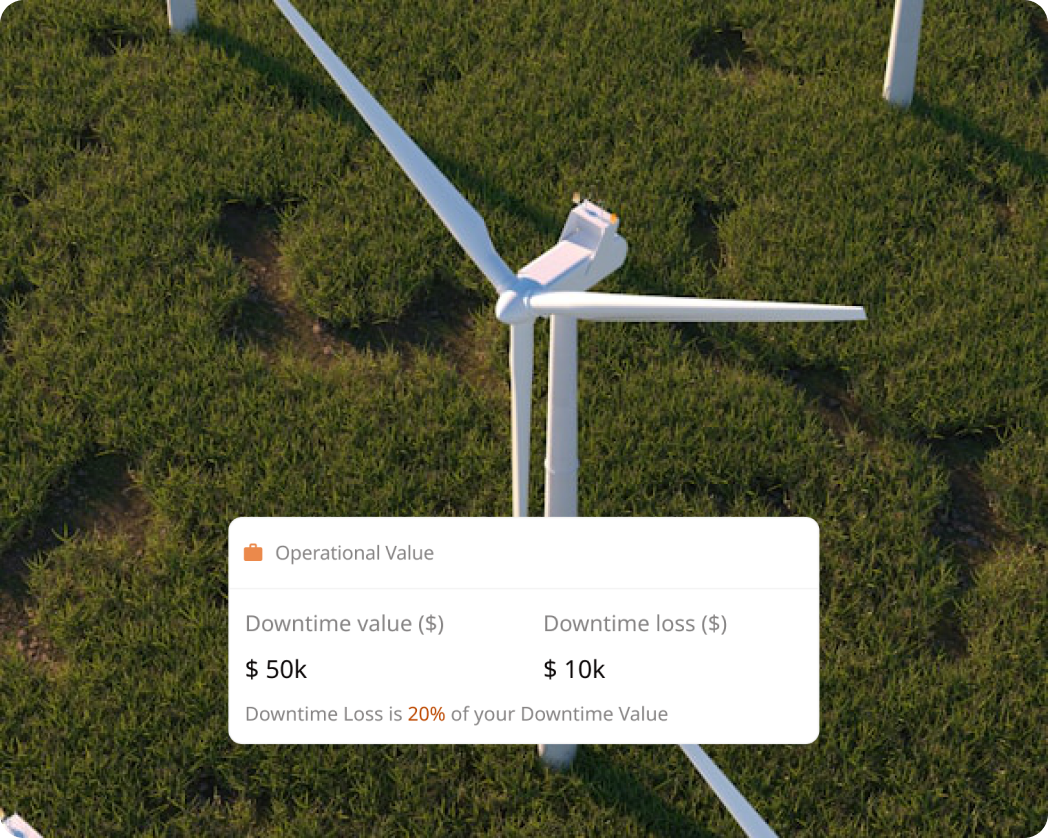
Illustrative mock-up
Arcadis engineering, design and construction delivery teams take the program into design and delivery. Asset data, hazard metrics and design levels carry straight into the design basis, so nothing is re-derived.
What you get: commissioned adaptations that measurably reduce climate risk.
Portfolios change: sites are bought and sold, values and uses change, and adaptations are completed. Nexus lets you update the portfolio, recalculate risk, and screen acquisitions before you commit. Support ranges from self-service to Arcadis-managed updates.
What you get: continuously updated risk and performance across the portfolio.
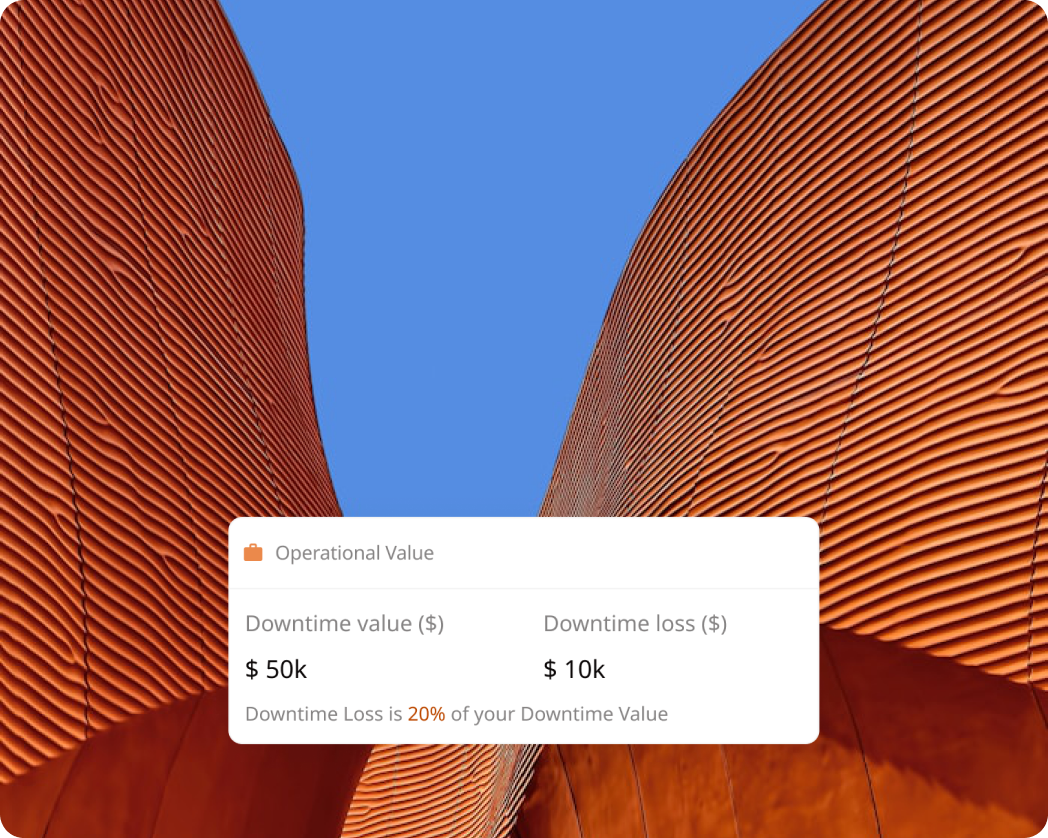
Climate data is widely available. Turning it into funded decisions is where most programs stall.
We select the climate data that best fits your objectives, assets, geography and level of assessment. Working with our partners or local sources, we give you the flexibility and confidence in the underlying data.
The damage and disruption functions are written by Arcadis engineers working on rail, water, energy and real estate assets, not taken from generic curves.
Downtime and lost service is the number infrastructure and operations teams actually manage, and most climate risk products stop at property damage.
Gross ton miles, delay minutes, units per day, population served. Not just dollars of property loss.
Assessment, adaptation design, construction delivery and ongoing tracking sit with the same organization.
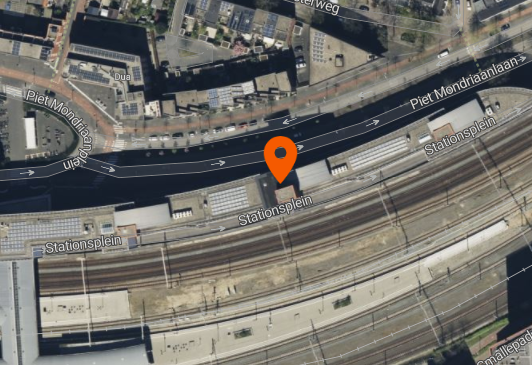
Asset value, modeled loss and downtime for each site, benchmarked against the portfolio average, with hazard-level detail to support a business case for intervention.
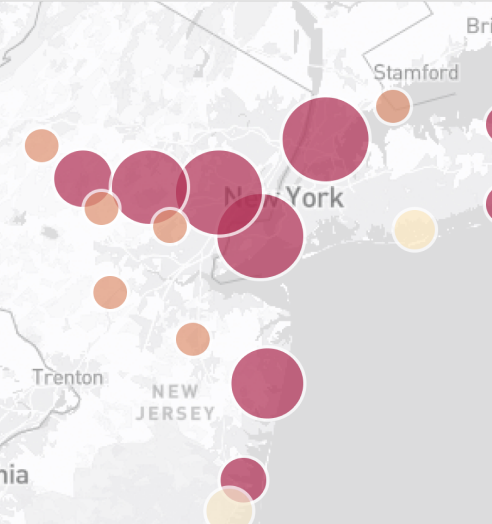
The assets driving the highest average annual loss, and how that changes across climate scenarios in five-year steps to 2100.
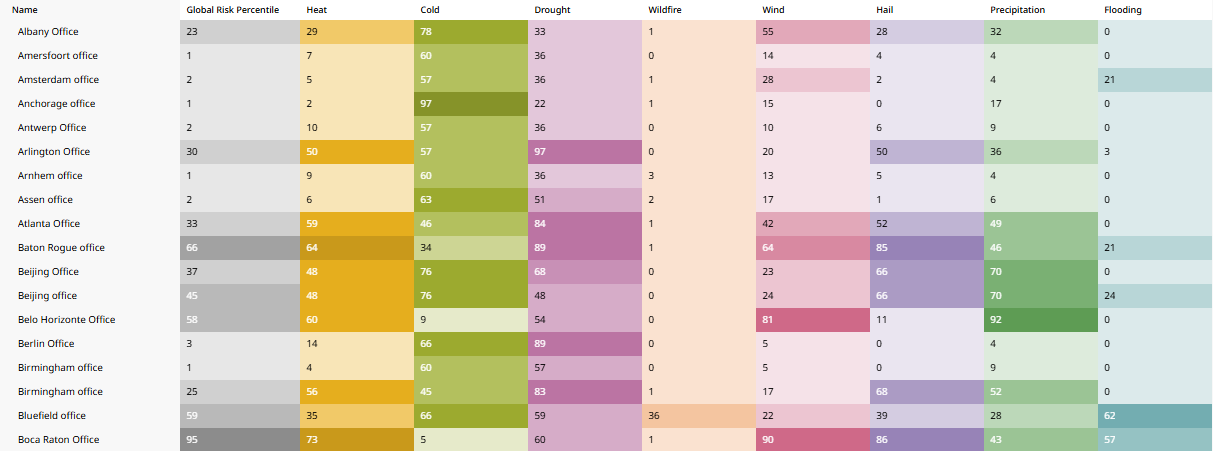
Every hazard side by side for every asset, separating portfolio-wide exposure from single-site problems.
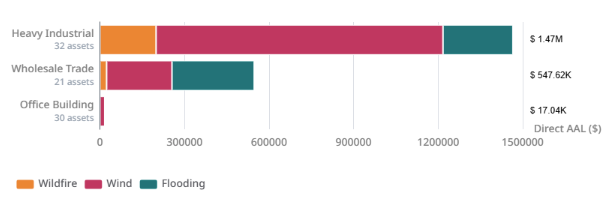
Climate risk for a target site or portfolio in days, before you buy or sell.
We're passionate about building resilience into our client's business

Product Director
Mark is responsible for Climate Risk Nexus: what it does, how it quantifies risk, and how climate analysis connects to adaptation and investment decisions. He works with client teams across infrastructure, real estate, public sector and finance on applying it to their portfolios.
Global Director, Climate Resilience & Sustainability Advisory
Roni leads Arcadis' Global Sustainability and Climate Advisory practice, bringing climate risk, net zero and transition planning together for clients. She is the executive sponsor for Nexus and directs how it supports client advisory work from assessment through to funded delivery.
Arcadis released PRICE, a five-step method for turning hazard modeling into funded adaptation decisions: pinpoint loss drivers, rank adaptation options, build the investment case, set capital strategy, then execute and evidence. Worked examples include a 52% positive return on flood-proofing in Houston and a projected 245% return on flood mitigation in Slovenia. Roni Deitz notes that resilience now competes for capital against expansion and modernization, so organizations need a consistent way to compare options.
Arcadis launched Climate Risk Nexus globally after three years of development with client input, bringing climate data and operational asset information into a single view of physical risk. Early deployments span education, freight, manufacturing and logistics. Roni Deitz describes the platform as enabling transparent, data-driven decision-making on what multiple perils mean for assets and operations.
Extreme heat, intense rainfall and rising groundwater rarely arrive one at a time. Roni Deitz argues that incremental adaptation no longer matches the pace of compounding hazards, and sets out how interconnected systems thinking, nature-positive design and innovative financing close the gap.
With warming now passing 1.5C, Deitz makes the case that understanding and managing climate risk is the precondition for every other decision. The article covers the rise of comprehensive climate risk assessment, including screening infrastructure projects before construction, and how net zero design and adaptation reinforce each other.
Generic hazard exposure screening rarely survives contact with a board. Tim Watson sets out three moves that raise the value of a physical climate risk assessment: use your own asset registers, condition audits, criticality ratings and insurance history rather than desktop defaults; bring operational stakeholders in early; and embed the output in your existing enterprise risk framework instead of running it alongside.
Adaptation funding needs run to $5.8 trillion through 2030 against roughly $640 billion committed. Deitz looks at how cities close that gap through multifunctional infrastructure, nature-based solutions and public-private financing structures that do not push costs onto the most exposed communities.
Arcadis will lead a 12 to 15 month funding and financing study for flood protection across Boston's waterfront, covering cost-benefit analysis, public and private funding options, and a financial roadmap for delivery. A working example of moving from coastal flood exposure to a fundable capital program.
Arcadis and Jupiter Intelligence entered a global strategic partnership to support portfolio and asset-specific climate risk and quantified impact in Climate Risk Nexus.

Here's a list of our most asked questions. If we haven't answered your question please contact us below.
Climate data tells you a site is exposed. Nexus tells you what that exposure costs: repair and replacement in dollars, downtime in days, and the operating measure you manage. It does that by applying damage and disruption functions to your specific assets, then carries those numbers into adaptation options, costed investment programs, and delivery.
From a range of leading climate data sources, plus local and client datasets where they are more accurate. We are deliberately not a climate data provider and not tied to one source. The data is selected for the client, the geography and the level of assessment.
It is the relationship between a hazard intensity and the loss it causes to a specific asset: what 600mm of water does to a substation, what a run of days above 35C does to track performance and how many trains can run over it. Arcadis maintains a library of hundreds of damage and disruption functions, built by the engineers who design, build and maintain those asset types. Generic curves are what most of the market uses; asset-specific functions are what make the dollar figure defensible.
Precision varies by asset and by what you can tell us. A portfolio screen using archetypes is deliberately coarse and is designed to find where risk concentrates, not to size a scheme. Site-level assessment with your asset data, drawings and operating information narrows it considerably. You can make a decision at either level and improve on it as the analysis deepens, which is the point of assessing in stages.
Flood (riverine, coastal, surface), extreme precipitation, heat, cold, wind, wildfire, drought and hail. Multiple emissions scenarios, in five-year time steps to 2100.
There is no floor and no practical ceiling. We have run single sites and portfolios of tens of thousands of assets. What changes with size is method, not availability: large portfolios start with a screen, small ones go straight to detail.
At minimum: asset locations, asset types, and a value or replacement cost. Better results come from operating data, criticality, drawings and any historical damage or outage records. We provide a structured input template and can complete it with you, including geocoding and reformatting what you already hold.
No. Nexus is delivered as part of an Arcadis engagement, with access to the platform for your team throughout. After the assessment you can keep updating your portfolio in the platform, with support ranging from self-service to Arcadis-managed updates.
Adaptation options developed and costed by our engineers, an investment program optimized against your available funding, design and construction delivery by Arcadis teams, and ongoing updating of the portfolio as you buy and sell assets and complete works.
Our global team of experts is ready to help you with a demo, answer your questions, and more. Contact us today to learn more.